A Klaviyo strategy job
where strategy is actually the job.
You already know how to do the strategy. Here, you finally have the time, team, and authority to do it properly.
Full-load strategists earn $5,000+/month. A strategist who can carry more from the beginning earns more from the beginning.
Full-time contractor · Fully remote · 60%+ EST overlap · Paid trial
Applications for this hiring round close Sunday at 11:59 PM EST.
We review the round on Monday. Applications submitted afterward automatically enter the following week's review.





Does your title say "strategist",
but your calendar says otherwise?
You were hired to think strategically. You are responsible for the result. But you do not always control the work that produces it. At Email Engineers, strategy is not one responsibility among twelve. Strategy is the job.
Strategy planning: one small block, squeezed between everything else.
You will still coordinate. You will still receive feedback. You will still work against deadlines. But you will not need to perform five different jobs to prove you can do one well.
This is not five jobs disguised as one.
You will not spend your day writing every email, designing campaigns, building sends inside Klaviyo, checking links for hours, creating reports nobody uses, joining calls simply to prove work is happening, or pretending a weak idea is strong because it came from a client. There will still be communication. There will still be accountability. But everything has an owner.

Strategy works better when the business already works.
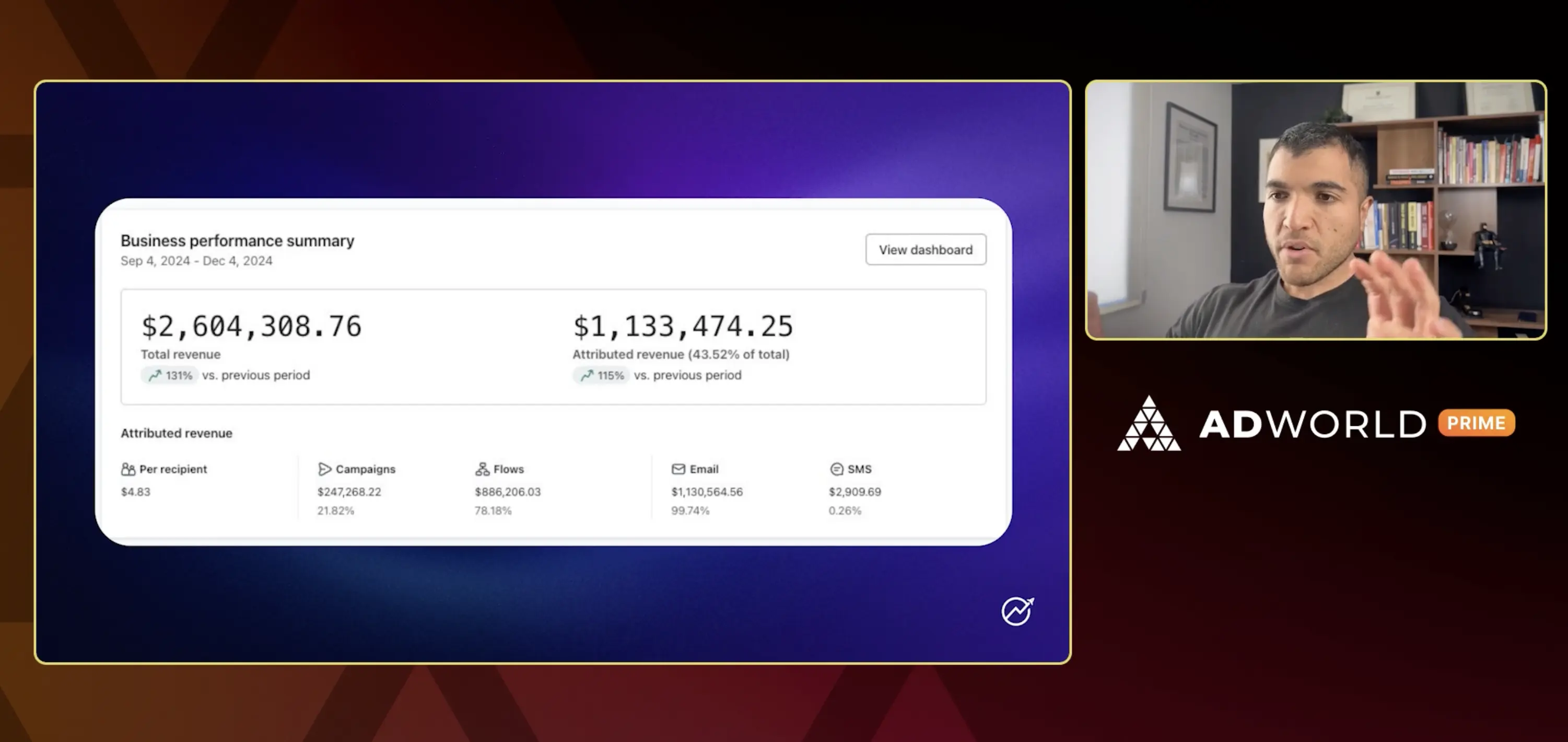
Email Engineers is a boutique Klaviyo agency for successful DTC brands generally doing between $3 million and $30 million+ per year. We are not usually hired to save a dying business by Friday. We are hired because a successful business knows its email program should be producing more.
We don't rescue brands
- No traffic
- No clear offer
- Product complaints
- Three weeks of runway
- "Need revenue immediately"
- Constant emergency messages
We grow brands
- Existing customer base
- Products already selling
- Consistent traffic
- Seasonal launches
- Underperforming email channel
- Clear growth opportunity
 Mattresses
 Saunas
 Automotive
 Tools
Tools Food
Food Beauty
 Lighting
 Machines
 Tech
Tech Skincare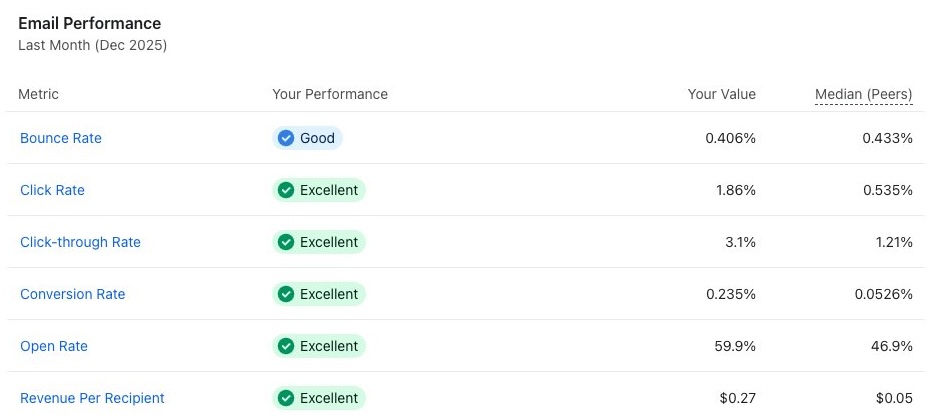
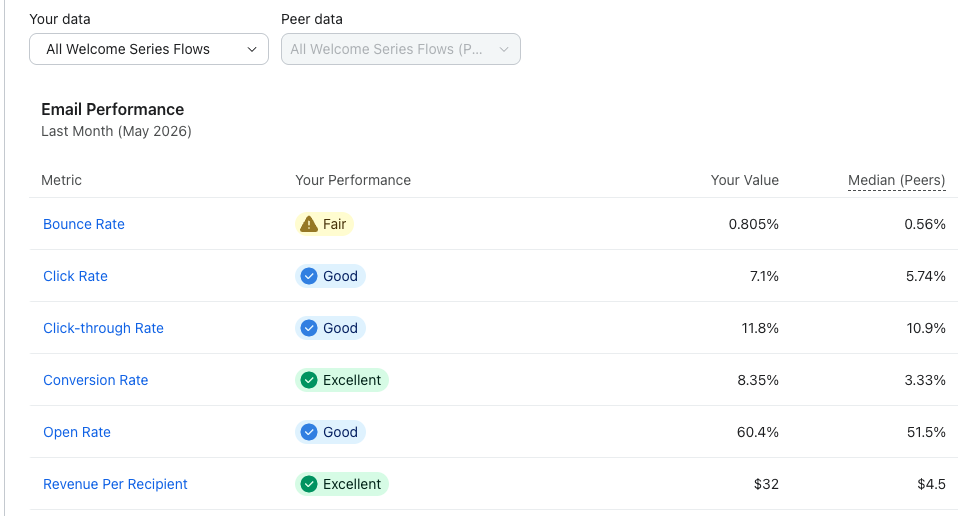 Straight from Klaviyo's own benchmarks, not our slides.
More judgment. Fewer status meetings.
Planning
Campaign calendars, offers, sequencing, flow architecture
Reviewing
Ideas, briefs, copy, design
Analyzing
Performance, customer response, tests, account trends
Coordinating
Team direction, strategic client questions, removing roadblocks
Synthesizing
Cross-account patterns, customer behavior, test results, and lessons worth applying elsewhere
A normal week: large focus blocks, balanced distribution.
AI can generate twenty ideas.
It cannot take responsibility for them.
AI can generate
The strategist must decide
A strategist who repeats templates is becoming easier to replace. A strategist who understands people is becoming harder to replace. You already bring the judgment. This role gives it more leverage.
Built so strategists are allowed to be strategists.

Matt in his natural habitat.
“Most agencies hire strategists, then bury them under everything except strategy”
Says Matias “Matt” Perelli, founder of Email Engineers.
“They write copy. They check links. They build reports. They sit through calls that could have been messages. By the time they finally get an hour to think, they are too tired to do their best thinking.”
Perelli built Email Engineers around a simpler idea: let strategists do strategy, and give everything else a clear owner. “There is one skill I have spent most of the past decade studying: knowing what makes someone buy,” he says.
“It is a skill that compounds. Every brand teaches you something. Every campaign gives you another clue. Even the emails that fail make you better, provided you are honest enough to ask why.”
AI, Perelli believes, will eliminate much of the busywork currently mistaken for strategy.
“That is good news,” he says. “It leaves more room for the part that always mattered: judgment.” “Which product deserves the campaign? Which idea earns the send? What does the customer still need to believe? Why did the clever email fail while the plain one sold?”
“Those are not production questions. They are judgment questions.” “That is the work I am obsessed with. And Email Engineers is built to give good strategists more time, authority, and support to do it properly."
Demanding does not have to mean chaotic.
The work is intellectually demanding. The operating environment is designed not to be unnecessarily demanding. You will occasionally approve something that underperforms, and reject something that may have worked: that is part of strategy. The rest of the difficulty, we remove.
Productive difficulty stays
- Choosing between two strong strategic directions
- Understanding a complex customer
- Planning several campaigns as one sequence
- Defending a recommendation to a sophisticated founder
Wasteful difficulty gets removed
- Rewriting copy because the brief was ignored
- Joining calls without a strategic purpose
- Chasing routine approvals
- Managing an impossible account load
- Being responsible for results without controlling the strategy
We cannot remove productive difficulty without removing the value of the role. We can remove much of the wasteful difficulty.
A real team, not a collection of Slack usernames
These are the specialists who turn strategic direction into finished work, and own their part of the result.


"It's the first job where I didn't burn out. And it's been three years. It challenges me, but it doesn't drain me."


"I was afraid my growth would be capped. As soon as I joined, that whole fear got destroyed. I was forced to improve, and quickly."


"I didn't have much experience when I got here. But I got courses, I got space to learn, and that helped me grow a lot."


"There's freedom, so long as you do what you need to do for the day and don't underperform, you can work when you like. There's no schedule and no micromanagement."
Good work requires more than talent.
It requires people who care about the result, tell the truth, and do what they say they will do. These are the standards we hire and work by.
We take the work seriously.
We enjoy difficult problems.
We study what works, examine what does not, and keep improving the details. Small improvements matter because, repeated over time, they become large ones.
When the work demands our best, we give it.
We tell the truth.
We speak plainly about what is working and what is not.
That includes giving honest feedback to clients, to one another, and to ourselves. We do not hide mistakes, soften important facts, or defend weak work because we made it.
Good feedback can be uncomfortable. It is still better than allowing a preventable problem to continue.
We do what we say.
Our words, decisions, and actions should agree.
We take responsibility for our work. We keep our commitments. And when something goes wrong, we address it directly rather than looking for someone else to blame.
We want to be the kind of people our clients and teammates are proud to work with.
The strategist makes sure every piece deserves to be sent.





Headlines address beliefs
An original headline that explains the product gets rewritten to address the customer's missing belief.
Proof moves earlier
When the audience is skeptical, proof appears before the offer — not after it.
Secondary CTAs get removed
Anything that divides attention without helping the customer decide comes out.
Irrelevant features get deleted
True but irrelevant to why this customer buys means it does not belong in the email.
"The first emails they sent us, less than 36 hours after we signed, were already ten times better than anything our previous agency had ever done."
Stephen · Head of Marketing, Flatpack
Your pay follows the portfolio you own.
Account load increases by mutual agreement: before another brand is added, you and the agency review workload, account health, quality, available capacity, and compensation. A strategist who can carry more from the beginning earns more from the beginning.
Your accounts are in good standing when:
- Work is planned and delivered on time.
- Problems are surfaced early.
- The team has clear strategic direction.
- Quality meets the agency standard.
- Clients understand and trust the plan.
- Account issues are actively addressed.
Eight brands here is not eight brands at your current agency.
You are not executing. The brands are established. The team is staffed. Ownership is clear. Additions are discussed, and compensation moves with them.
And a strategist here can say that adding another brand would weaken the work and be heard.
A paid trial instead of a leap of faith
1 · Simple application
Your background, your CV, and a few questions about you.

2 · Loom Video
A few simple questions on camera. We watch every submission personally.
We read every application and watch every Loom. If we believe you could be the right strategist, we invite you to the paid trial. Either way, you hear back within a week.

3 · Paid trial project
A short piece of real strategy work.
4 · Final conversation
Discuss the role, the trial, the working relationship, and any unanswered questions.
5 · Decision
You receive a decision within 24 hours of the final conversation. No weeks of silence.
6 · Account handoff
Receive the context behind your initial portfolio, meet the specialists responsible for execution, and take strategic ownership.
Already employed? That is expected.
You do not need to resign before applying. We expect many strong candidates to be employed by another agency. Your application is confidential, and reasonable notice periods are factored into the process.
The questions an employed strategist should ask before changing agencies.
Will I receive six brands on day one?
Do I need to write copy?
How much Klaviyo execution will I do?
How often will I speak with clients?
What happens during BFCM?
How are accounts handed over?
How is my work evaluated?
What if I disagree with the team or a client?
What if the role is not working out?
How quickly can I reach $5,000+?
Is there a career path beyond eight brands?
Can I apply while employed? Is it confidential?
How is the trial paid?
What does 60% EST overlap mean?
How quickly will I hear back?
Come do the work you thought a strategy role should
Decide what should be sent. Explain why. Direct specialists who execute it. Keep your judgment sharp across established DTC brands. Get paid for the responsibility you carry. Become harder to replace.
Apply for the strategist seatWe hire in weekly review rounds and onboard one strategist at a time.
Apply by Sunday at 11:59 PM EST to be considered in Monday’s review.